My layout is the result of a return to railway modelling following early retirement in 2012, and seeing a 2mm Finescale layout at a local exhibition. I had tried to build models to 2FS standards in the 1980’s but had failed to get a locomotive working, so gave up and reverted to 4mm modelling. What is seen today is the result of a little over 12 years work.
At the outset of the project I drew up a list of what I wanted from my model railway, the most important of these was that it would be a freelance through station location (albeit based on what might have been), a second factor was that it would represent the Edwardian era (circa 1906) as I personally find railways to be at their most attractive around that time – especially the GWR as goods stock could be in any one of a few different liveries (red or grey, with a variety of lettering or cast plates denoting company ownership), a further important point was that it had to be exhibitable and to that end I also wanted it to look slightly different from the run-of-the-mill GWR branch line, so elected to build the trackwork to represent Brunel’s “Baulk Road”.
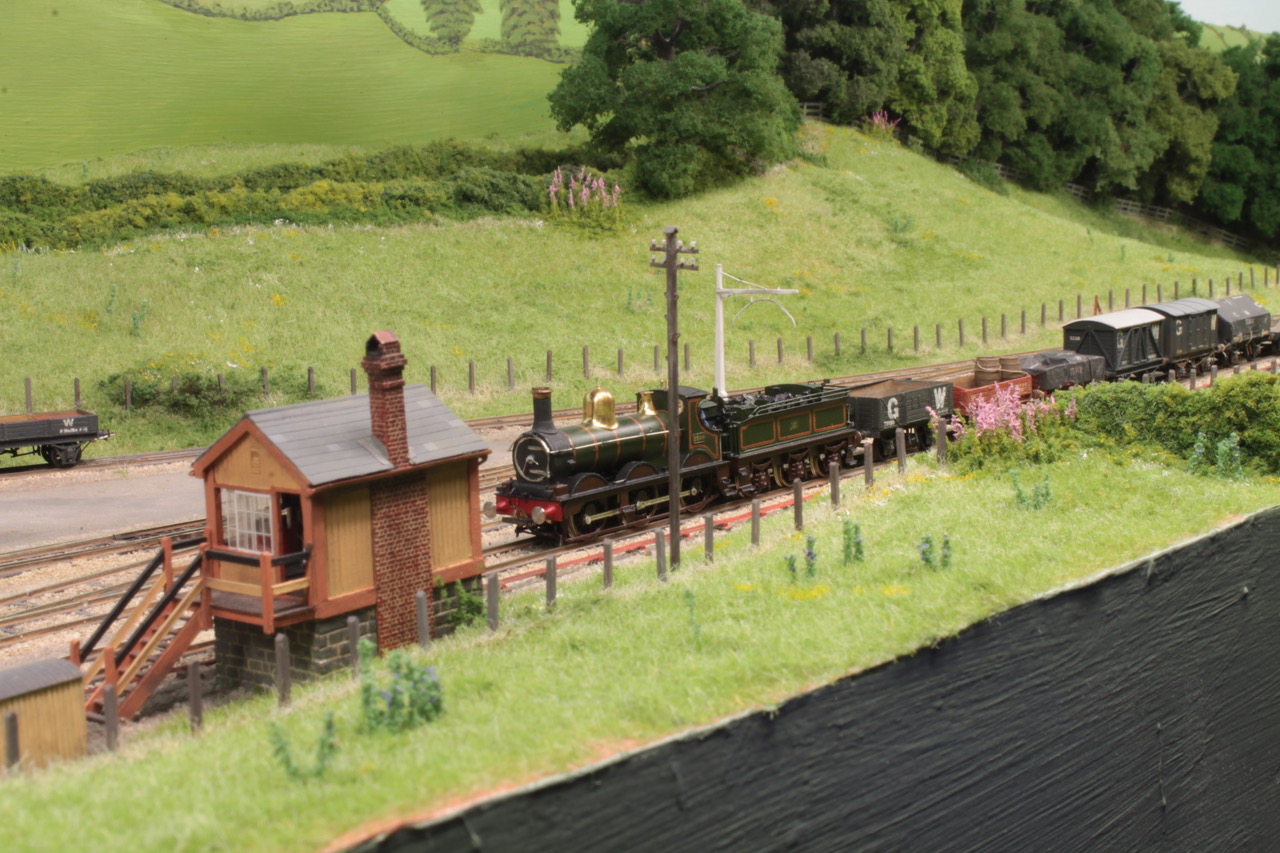
The location of Modbury was decided on as it lies in the beautiful South Hams district of Devon, and a very early scheme was that the railway would cross over the River Dart at Dittisham then follow the river south through Dartmouth then down the coast to Slapton where it would turn inland and head across to Kingsbridge, before heading north west through Aveton Gifford, Modbury, Yealmpton and finally to Plymouth. In my world, that is what the South Devon Railway actually built, but when the SDR was absorbed into the GWR in the 1870’s a new route (the real route) was built rendering my line a secondary branchline.
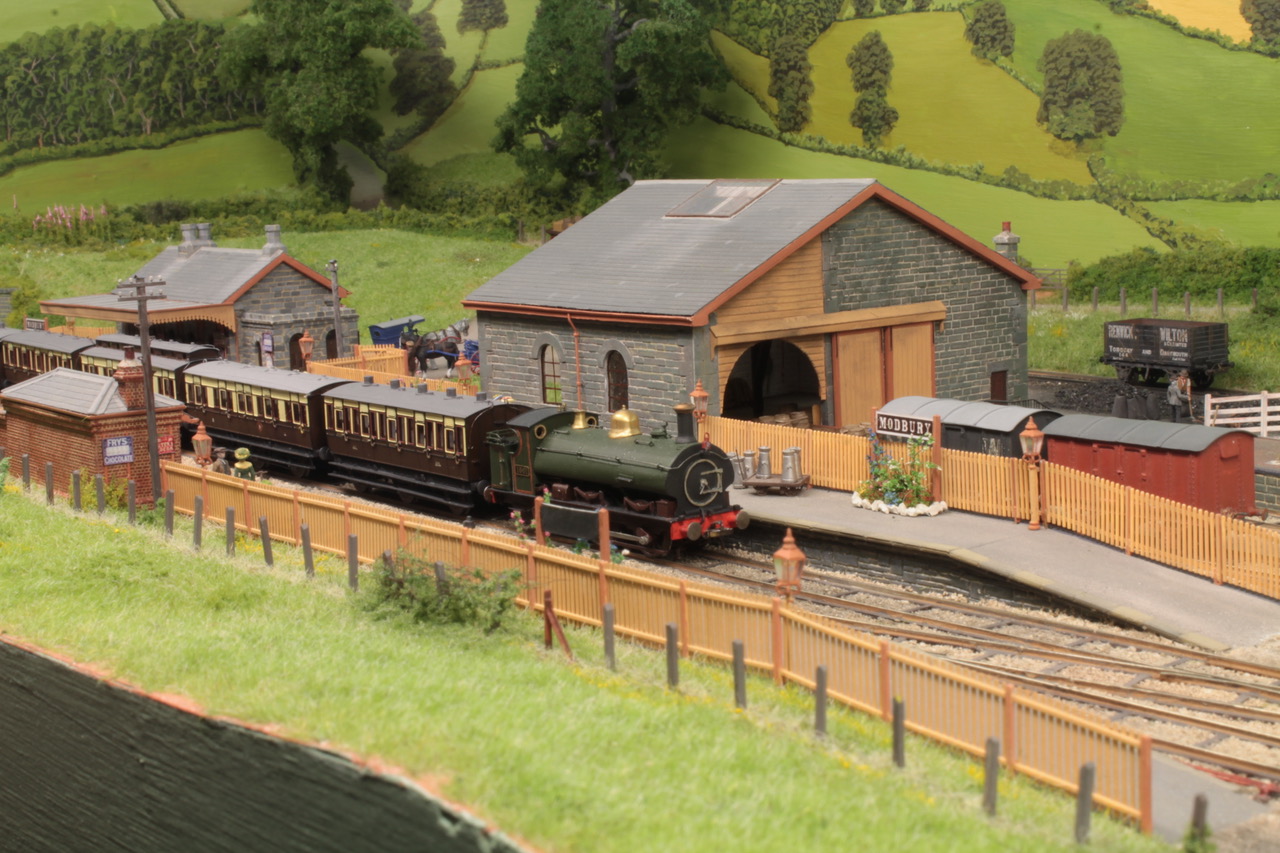
The layout itself is some 10’0” x 1’6”, with a central 6’3” long scenic section with traintables at each end for stock storage. The buildings are all scratchbuilt and are based on those at Bovey Tracey on the Moretonhampstead line, with the exception being the signal box which is a standard design for a small box, this particular one being modelled on the one at Bodmin. The rolling stock on the layout is all kit or scratchbuilt, the rake of 6 wheeled coaches for example are etched nickel silver kits from artwork drawn up by myself.
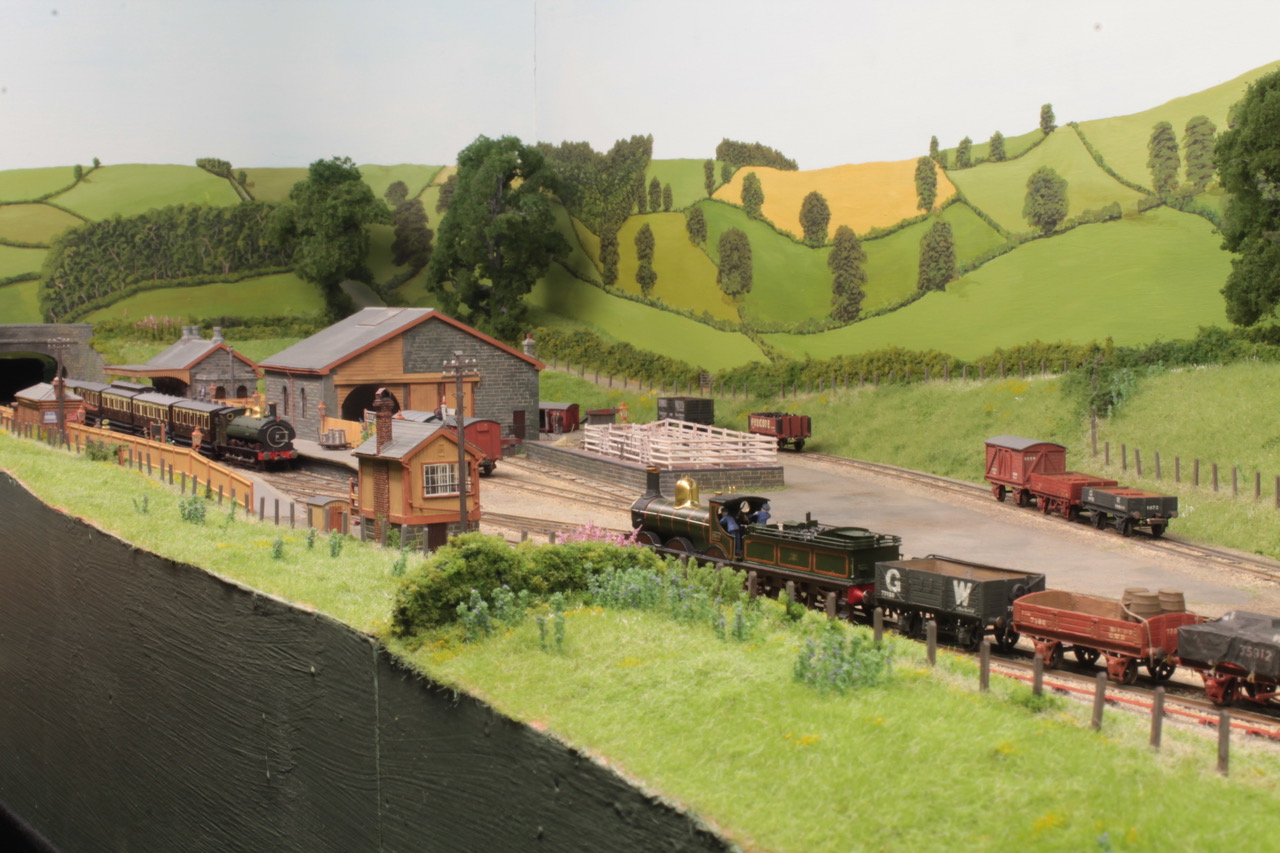
All of the signals work, and actually control movement by use of relays (one powering the track in advance of the signal and a further one powering the track in rear of the signal). One day I hope to build a fully interlocked lever frame to replace the bank of switches currently seen on the control panel. The points are all controlled through memory wire actuators which have proved very reliable and provide a nice slow movement – although if I were building again I would probably use servos.
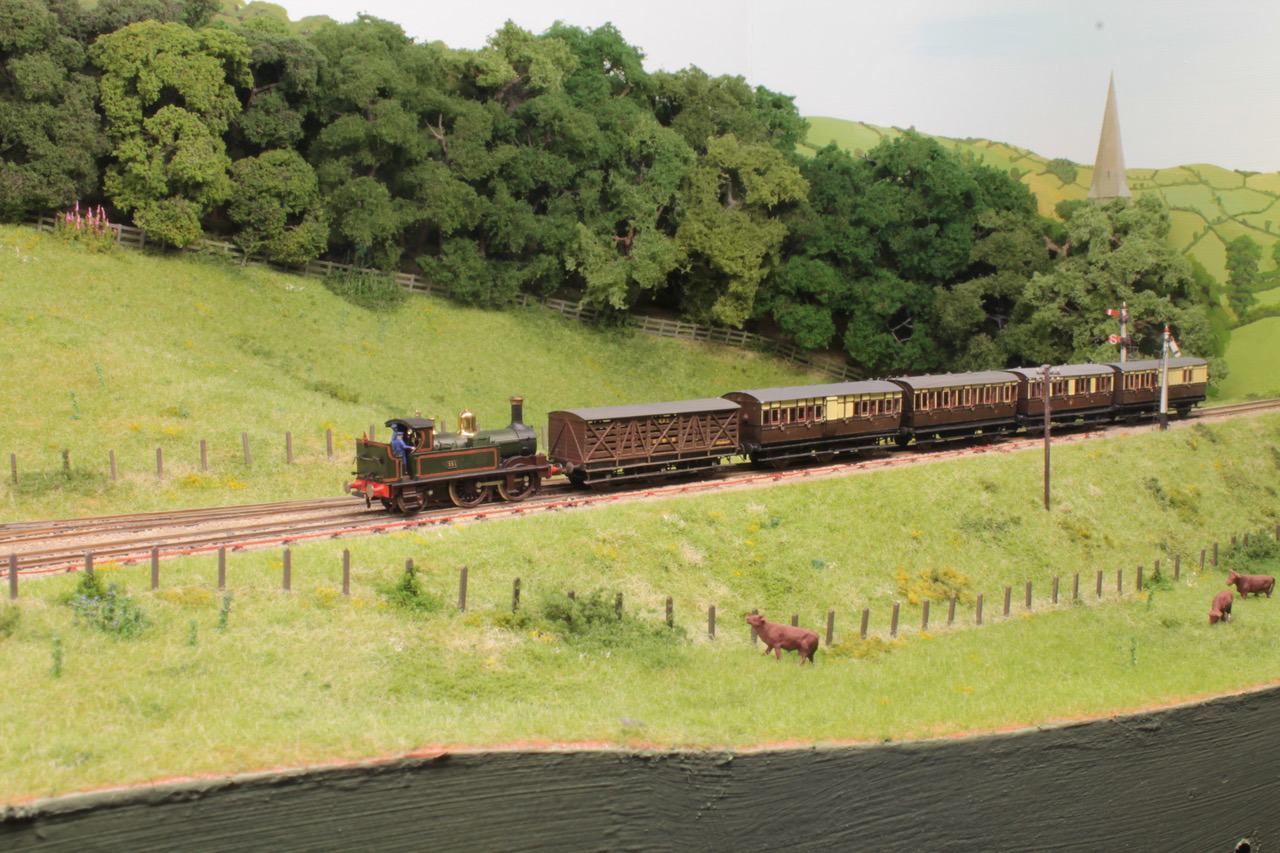
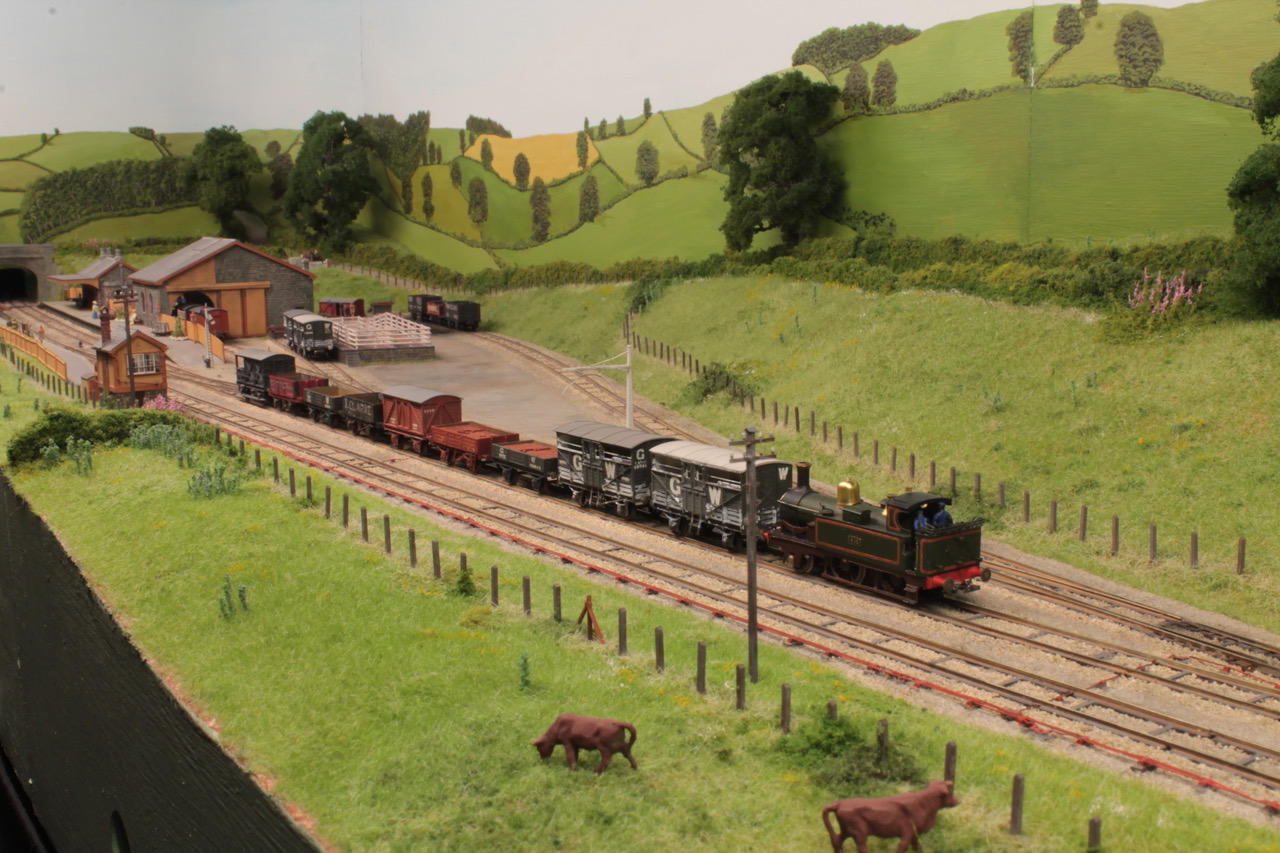
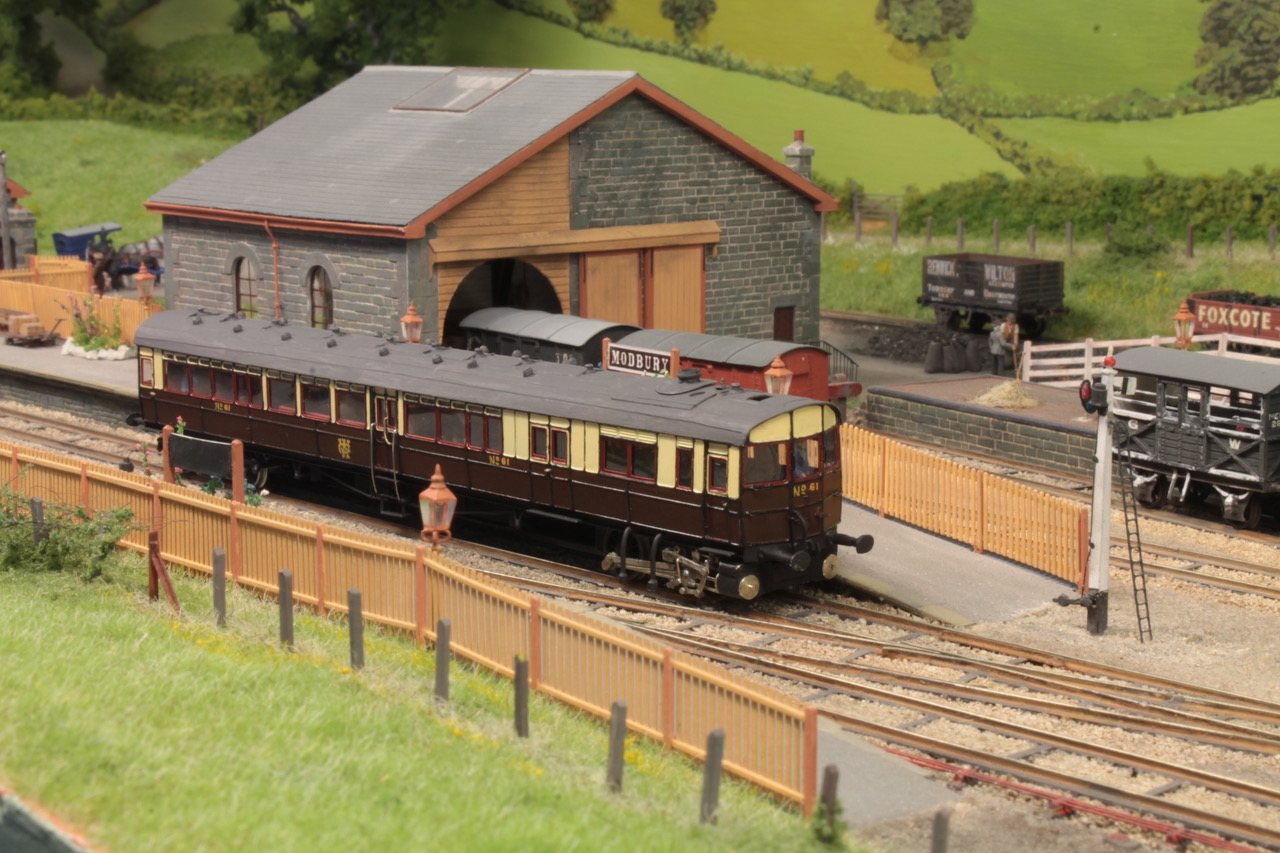

The scenery makes use of static grass, but before the fibres were deployed little patches of foliage material sponge was glued randomly over the ground surface so that when the static grass was deployed it gave a clumpy rather than billiard table look. The hedges are scouring pan material covered in foliage material, and the trees are twisted copper wire armatures for the trunk and branches with foliage material added.